by Judy Dempsey*
Since the establishment of the Federal Republic of Germany seventy-five years ago, the country has rested on four pillars. Today, none of them can be taken for granted.
The first pillar is the security umbrella provided by the United States since 1945. Without it, neither Germany nor Europe would have prospered or enjoyed stability.
The second pillar is the EU. Psychologically, politically, economically, and socially, the EU embedded post-war West Germany and later East Germany into the West.
The third pillar is—or was—Russia. During the late 1960s, Germany became the advocate of detente with the Kremlin. It was keen to forge a special relationship with Moscow, believing that close economic ties would lead to more stable relations and possible promote change in Russia. Energy was a key element underpinning this rapprochement.
Relying on Russian energy, in retrospect, played a major role in holding back Germany from modernizing its economy. Cheap and reliable sources of Russian gas provided no incentive for moving away from a model in which energy-intensive industries, such as the chemical, steel, and automobile sectors didn’t have to worry about their energy supplies.
The fourth pillar is Germany’s unswerving support for Israel. The war between Israel and Hamas is testing that special bond.
These four pillars are no longer a given. And how Germany adapts to the new realities will affect the future direction of the EU.
U.S. commitment to Europe will continue but in a different way. Europe will have to take much more responsibility for its defense. Germany, however, has yet to grasp the inevitability and necessity of this fact. Chancellor Olaf Scholz’s much-touted Zeitenwende, announced after Russia’s invasion of Ukraine in February 2022, is hampered by bureaucracy, a dispute over modernizing the armed forces, and angry discussions over how to fund security. The government doesn’t even have the funds to finance the promised brigade of 5,000 troops for Lithuania as part of NATO’s efforts to boost this flank of the alliance.
Germany’s EU pillar will remain. Yet the direction is unclear. Scholz, like his predecessor Angela Merkel, has no strategic outlook with regard to the further integration of the bloc. Nor does he link the future of the transatlantic relationship to the future of the EU.
This lack of a strategic compass for Europe and the continent’s defense affects the relationship with Russia.
When Putin’s full-scale invasion of Ukraine forced Germany to end its energy dependence on Russia, energy prices in Germany soared and Berlin pushed to speed up the transition to renewable energies. Above all, Russia’s war on Ukraine exposed the immense vulnerabilities of the German economy.
Cheap Russian gas allowed energy-intensive industries to postpone de-industrialization. As China, the United States, Japan, and South Korea sped ahead with retooling their car and other industries, Germany slept. It is now in a race to regain competitiveness. Yet countless studies show how a gargantuan bureaucracy and powerful lobbies smothers innovation and flexibility. The notoriously slow digitalization, including the under-investment in AI, is just one case in point. Russia spoilt Germany.
The fourth pillar, Germany’s relationship with Israel, is being tested against the background of the war between Israel and Hamas. Pro-Palestinian demonstrations in German universities are often mixed with anti-Israel slogans. More importantly, how will Berlin react if the judges of the International Criminal Court agree to support the arrest warrants for leaders of both Israel and Hamas?
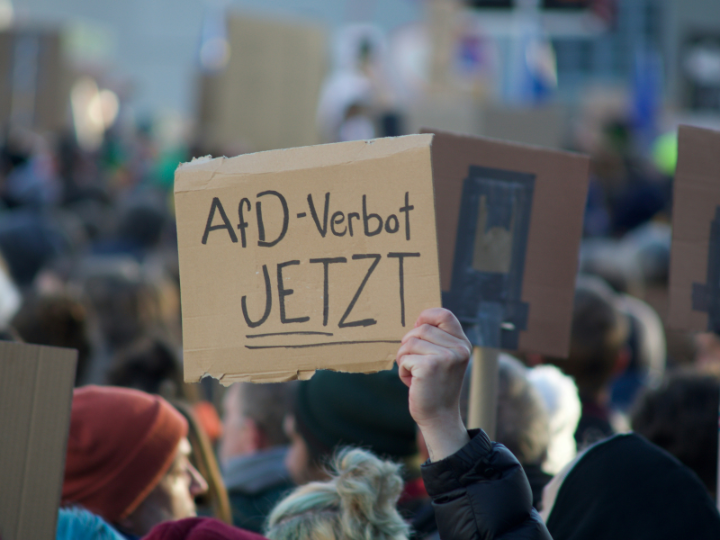
Predating the Israel-Hamas war is the growing anti-Islam and anti-immigrant rhetoric as well as anti-Semitic attacks. Merkel’s decision to give refuge to over 1 million people fleeing the war in Syria was a gift for the far-right party Alternative for Germany. It has played the anti-immigrant card, combined with neo-Nazi sympathies ahead of the European Parliament elections.
Such rhetoric is becoming linked to political violence. Hardly a day goes by without local politicians being attacked or harassed. Prominent politicians are also being physical and verbal assaulted. The rhetoric of the far-right Alternative for Germany and the far left are fueling hate and contributing to a polarization of society not seen in decades.
The four pillars reflect the challenges facing Germany.
The EU pillar is under attack by the AfD. The party’s European Parliament election campaign posters are about have a Germany for Germans. Forget the fact that its main candidate had to resign following allegations of spying for Russia and China. These elections are exposing fault lines in a country in which support for the EU was a given.
The responsibility falls on Scholz to lead. His inability to communicate “Europe” is consistent with his inability to lead Germany through such tumultuous times. Even if there is wishful thinking that things will return to what they were, there is no going back to the status quo ante. Scholz and his coalition are not prepared to face that reality. This is grim news for Europe.
*Nonresident Senior Fellow, Carnegie Europe, Editor in chief, Strategic Europe
**first published in: Carnegieendowment.org
 By: N. Peter Kramer